Hyderabad Chronicle is a digital news publication featuring daily local coverage, a weekly magazine, and an e-paper for readers in Hyderabad and beyond.
I’m sorry I couldn’t be there in person, but I was so excited to watch the Midjourney Medical launch from afar. This is a really big deal. David Holz, one of the most underrated pioneers in AI, has taken money from making cat pictures to build a full-body ultrasound scanner that can give you incredible visibility in 60 seconds.
You can re-watch the livestream here, which I recommend. You might remember David from Leap Motion, which I blogged back in 2012. It’s so cool to a small but mighty independent company innovate and apply learnings across seemingly disparate sectors.
I wish all my friends in jazz and the arts who are despondent about tech could meet David:
“We’re going to be a little confusing for the next six months as we announce all the things, but I’m hoping as they all are out there, they form a picture which I hope feels cohesive. Most of them are around creativity, but some of them, like this, are just around positive human futures that we actually want to be a part of. And I think this is an important thing for AI companies to do—for all humans to do.” — David Holz
If you understand imaging, you know the tradeoffs between X-ray, CT (computed tomography), MRI (magnetic resonance imaging), and ultrasound, and Midjourney’s approach doesn’t cover everything, but what’s incredible is the speed, amount of data, and using AI to process and get something useful out of it. Ultrasonics will be an incredibly exciting area over the next few years, first for imaging and later for intervention. I can imagine a future where you dip into one of these once a month just to keep an eye on things, not just to find bad stuff but to see the impact of exercise or dietary changes.
We’re fairly new to scanning healthy people, and I always advise friends getting their first whole-body MRI with Biograph or Prenuvo that it’s very common to hear something scary at first, only to find it’s benign. Also, I’ve now heard many examples of things that were caught and treated early, years before they might otherwise have been noticed.
I’m sorry I couldn’t be there in person, but I was so excited to watch the Midjourney Medical launch from afar. This is a really big deal. David Holz, one of the most underrated pioneers in AI, has taken money from making cat pictures to build a full-body ultrasound scanner that can give you incredible visibility in 60 seconds.
You can re-watch the livestream here, which I recommend. You might remember David from Leap Motion, which I blogged back in 2012. It’s so cool to a small but mighty independent company innovate and apply learnings across seemingly disparate sectors.
I wish all my friends in jazz and the arts who are despondent about tech could meet David:
“We’re going to be a little confusing for the next six months as we announce all the things, but I’m hoping as they all are out there, they form a picture which I hope feels cohesive. Most of them are around creativity, but some of them, like this, are just around positive human futures that we actually want to be a part of. And I think this is an important thing for AI companies to do—for all humans to do.” — David Holz
If you understand imaging, you know the tradeoffs between X-ray, CT (computed tomography), MRI (magnetic resonance imaging), and ultrasound, and Midjourney’s approach doesn’t cover everything, but what’s incredible is the speed, amount of data, and using AI to process and get something useful out of it. Ultrasonics will be an incredibly exciting area over the next few years, first for imaging and later for intervention. I can imagine a future where you dip into one of these once a month just to keep an eye on things, not just to find bad stuff but to see the impact of exercise or dietary changes.
We’re fairly new to scanning healthy people, and I always advise friends getting their first whole-body MRI with Biograph or Prenuvo that it’s very common to hear something scary at first, only to find it’s benign. Also, I’ve now heard many examples of things that were caught and treated early, years before they might otherwise have been noticed.
Applications are now open for the 2026 Kim Parsell Memorial Scholarship, which supports one active WordPress contributor who identifies as a woman and has not previously attended WordCamp US. The scholarship helps make it possible for a community member with financial need to join WordCamp US 2026 in Phoenix, Arizona, and take part in one of the largest annual gatherings in the WordPress project.
The scholarship honors Kim Parsell, a longtime WordPress contributor whose work and presence left a meaningful mark on the project. Kim was known for her care, generosity, and commitment to helping others feel welcome in open source spaces. For readers who are less familiar with her story, the tributes shared by friends and colleagues offer a deeper look at her role in the WordPress community and the lasting impact she had on those who knew her. Through this scholarship, the WordPress Foundation continues to recognize contributors who reflect that same spirit of participation and community.
WordPress is built by people from many backgrounds, experiences, and areas of expertise. Events like WordCamp US create space for contributors to meet in person, learn from one another, and continue the work that supports the software and the community around it. For some contributors, the cost of travel, lodging, and registration can make attending difficult. The Kim Parsell Memorial Scholarship helps reduce that barrier for one eligible contributor each year.
Scholarship Details
One scholarship will be awarded for WordCamp US 2026. Applicants must:
Identify as a woman.
Be actively involved as a contributor to WordPress.
Have never attended WordCamp US before.
Demonstrate financial need to attend the event.
The scholarship includes the cost of a WordCamp US 2026 ticket, round-trip flight, and lodging. Applications are open through July 10, 2026, and all applicants will be notified of the decision by July 24, 2026.
WordCamp US 2026 will take place August 16–19, 2026, at the Phoenix Convention Center in Phoenix, Arizona. Contributors, attendees, volunteers, organizers, and sponsors will come together to share ideas, learn from each other, and continue building the future of WordPress. For many contributors, attending in person creates new ways to collaborate, find support, and stay connected to the open source work that happens throughout the year.
Applications are now open for the 2026 Kim Parsell Memorial Scholarship, which supports one active WordPress contributor who identifies as a woman and has not previously attended WordCamp US. The scholarship helps make it possible for a community member with financial need to join WordCamp US 2026 in Phoenix, Arizona, and take part in one of the largest annual gatherings in the WordPress project.
The scholarship honors Kim Parsell, a longtime WordPress contributor whose work and presence left a meaningful mark on the project. Kim was known for her care, generosity, and commitment to helping others feel welcome in open source spaces. For readers who are less familiar with her story, the tributes shared by friends and colleagues offer a deeper look at her role in the WordPress community and the lasting impact she had on those who knew her. Through this scholarship, the WordPress Foundation continues to recognize contributors who reflect that same spirit of participation and community.
WordPress is built by people from many backgrounds, experiences, and areas of expertise. Events like WordCamp US create space for contributors to meet in person, learn from one another, and continue the work that supports the software and the community around it. For some contributors, the cost of travel, lodging, and registration can make attending difficult. The Kim Parsell Memorial Scholarship helps reduce that barrier for one eligible contributor each year.
Scholarship Details
One scholarship will be awarded for WordCamp US 2026. Applicants must:
Identify as a woman.
Be actively involved as a contributor to WordPress.
Have never attended WordCamp US before.
Demonstrate financial need to attend the event.
The scholarship includes the cost of a WordCamp US 2026 ticket, round-trip flight, and lodging. Applications are open through July 10, 2026, and all applicants will be notified of the decision by July 24, 2026.
WordCamp US 2026 will take place August 16–19, 2026, at the Phoenix Convention Center in Phoenix, Arizona. Contributors, attendees, volunteers, organizers, and sponsors will come together to share ideas, learn from each other, and continue building the future of WordPress. For many contributors, attending in person creates new ways to collaborate, find support, and stay connected to the open source work that happens throughout the year.
Growing a WooCommerce store is one thing. Scaling it is a whole different challenge. At some point, the simple setups that got you to your first 100 sales will actually start to slow your website down as you grow.
That’s where most store owners get stuck. Slow load times, abandoned carts, and checkout processes that lose money are common problems with scaling WooCommerce. Luckily, these are fixable problems if you know where to look.
That’s why I put this guide together. I’ve broken scaling down into four phases, from quick wins you can do today to the advanced setups behind the biggest eCommerce brands, so you can start wherever your store is right now.
Whether you’re just hitting your growth ceiling or ready to go big, these tips will help you get there faster.
Quick Summary: Scaling a WooCommerce store means lightening the background work your server does and giving it room to serve many shoppers at once, which you build up across four phases.
Phase 1 – Quick maintenance wins: clean the database, remove unused plugins, and compress images to free up resources.
Most people think a fast online store is all they need. But there is a big difference between a site that loads quickly for one person and a site that stays fast when hundreds of people are shopping at the same time.
When a customer adds an item to their cart or heads to the checkout, your server has to do a lot of work behind the scenes. It has to check inventory, calculate taxes, and communicate with your payment processor.
If too many people try to do this at once, then your server can become overwhelmed. Think of it like a computer trying to open 50 heavy programs at the same time. Eventually, it just freezes.
Scaling is the process of making those background tasks lighter and giving your server the processing power it needs to handle a crowd without crashing.
Signs Your WooCommerce Store Is Ready to Scale
Not sure if your store has hit this point yet?
Here are the most common signs that it’s time to scale your WooCommerce store:
Your pages load slowly or your server takes longer to respond when traffic is high.
Your site slows down or crashes during traffic spikes, product launches, or big sales.
A growing catalog of hundreds or thousands of products is making your shop and search pages heavy.
Your current hosting plan is maxing out, hitting CPU or RAM limits, or throwing frequent errors.
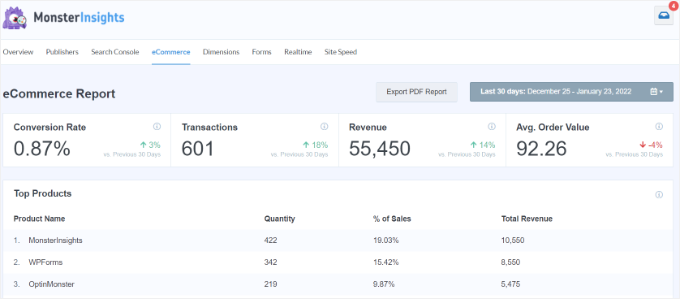
We use MonsterInsights to keep an eye on these numbers, because it brings your Google Analytics data right into the WordPress dashboard.
Its eCommerce report shows your conversion rate, revenue, average order value, and top products, while its traffic reports show when visitors surge. That makes it much easier to spot a declining conversion rate or a sudden traffic spike early, so you can start scaling before it costs you sales.
Before you change a single setting, it helps to know where your store stands today. Scaling works best as a loop: measure, make a change, then measure again.
Without a baseline, you can’t tell whether a tweak actually helped or where your next bottleneck is hiding. (You’ll stress test your store later in Phase 4 to find its breaking point, but that comes after you know your starting numbers.)
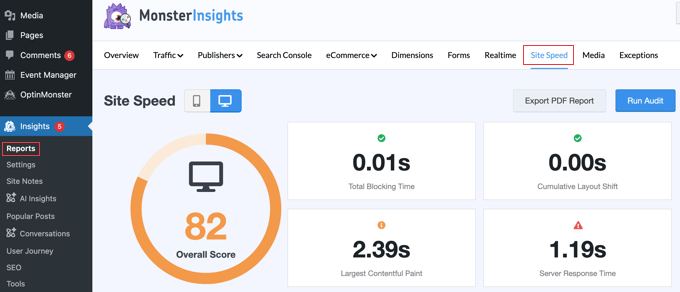
Watch your Core Web Vitals most of all. These are the three metrics Google uses to judge page experience: Largest Contentful Paint (LCP), Interaction to Next Paint (INP), and Cumulative Layout Shift (CLS).
Then, make a note of your baseline scores so that you have something to compare to once you’ve followed the tips in this guide.
Scaling doesn’t always need a massive budget or a team of developers. In fact, many of the best performance gains come from just cleaning up the clutter that collects as a store grows.
These first few steps are designed to be low-risk and high-reward, allowing you to see immediate improvements in your site’s responsiveness.
Think of this phase as clearing the tracks so your store can run at full speed without any hidden obstacles slowing it down.
1. Regularly Clean Up Your Database to Prevent Sluggishness
Every time a customer visits your store, your server has to talk to your database. A busy store generates a massive amount of junk data, such as expired transients, old order logs, and orphaned metadata.
If your database is cluttered, then these queries take longer, leading to a slow experience for your customers. To keep things moving quickly, you should get into the habit of performing a deep clean once a month.
Important: Always create a complete backup of your website using a plugin like Duplicator before optimizing your database.
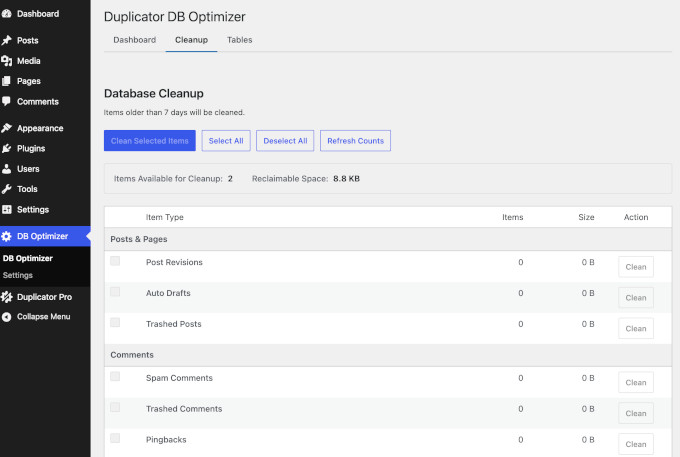
After your backup, you can use a plugin like DB Optimizer to clean your database.
It allows you to do bulk database cleanups, optimize and repair your database tables, and view everything from a beginner-friendly health score dashboard.
It is tempting to install a new plugin for every small feature you want to add. However, every active plugin adds code that your server must process. In many cases, heavy plugins can be the primary reason that a store fails to scale.
At WPBeginner, we use WPCode to replace several single-purpose plugins. This is a strategy we use across our brands because it allows us to keep our site functionality high without adding unnecessary bloat to our server.
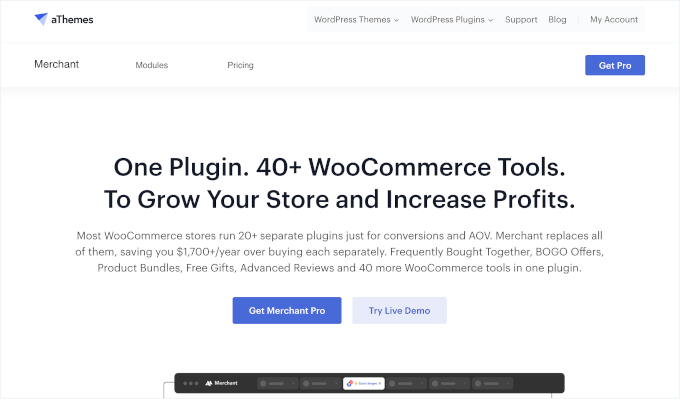
For WooCommerce stores specifically, the Merchant plugin is an all-in-one WooCommerce growth tool with 40+ tools included. It allows you to handle BOGO offers, product bundles, product waitlists, and more.
I also recommend periodically reviewing your active plugins and asking if each one is truly essential. If a plugin isn’t providing clear value, then it’s best to deactivate and delete it entirely.
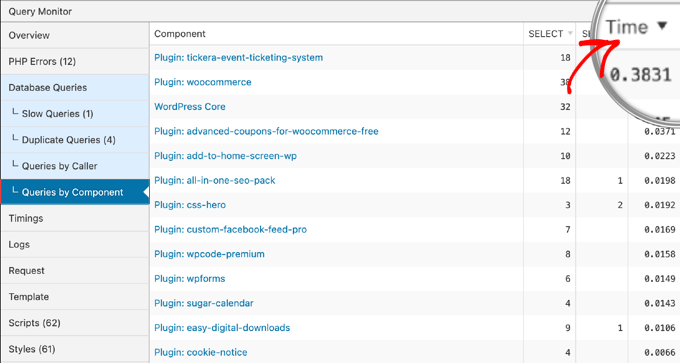
If you aren’t sure which plugins are the problem, then you can add a WordPress query monitor to see exactly which ones are making your server work too hard.
Note: Query Monitor is an advanced developer tool, so its dashboard can look intimidating at first, but it is highly effective for identifying slow plugins.
High-resolution product photos are essential for making sales, but they are also a common cause of slow page loads. If your server is busy struggling to send huge image files to dozens of visitors at once, then it won’t have the resources left to process checkouts quickly.
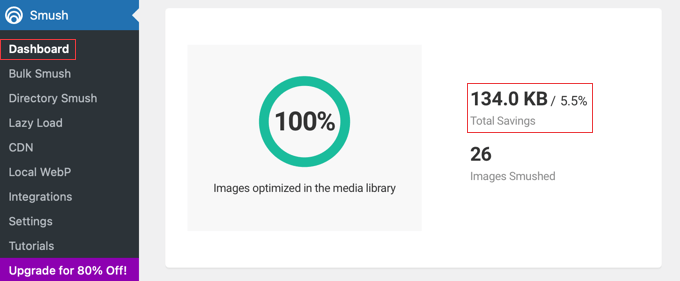
The good news is that you can fix this without losing image quality. You can use a plugin like WP Smush to automatically shrink your images as you upload them.
I also recommend enabling WebP conversion within these plugins. This serves your photos in a modern format that looks great but is significantly lighter for your server to handle. It’s a simple ‘set it and forget it’ win for your store’s speed.
By default, WooCommerce uses a feature called ‘Cart Fragments’. This script ‘pings’ your server on every single page load, even on basic blog posts, just to update the cart icon in your header.
While this seems small, on a high-traffic site, it can result in thousands of unnecessary server requests every hour that slow down your real customers.
The most efficient way to handle this is to disable the script on the pages where it isn’t needed, like your homepage or your blog. You can do this easily by adding a custom PHP snippet using WPCode.
Simply create a new snippet, set the code type to ‘PHP Snippet’, and paste in a bit of code that tells the script to only run on your shop and checkout pages. This keeps your store functional while freeing up significant server resources.
add_action( 'wp_enqueue_scripts', 'wpb_disable_cart_fragments', 99 );

function wpb_disable_cart_fragments() {
    // Check if WooCommerce is active and we are NOT on a store-related page
    if ( function_exists( 'is_woocommerce' ) ) {
        if ( ! is_woocommerce() && ! is_cart() && ! is_checkout() && ! is_account_page() ) {
            wp_dequeue_script( 'wc-cart-fragments' );
        }
    }
}
Note: If you are using a modern block-based theme, then WooCommerce likely already optimizes this for you. However, for classic themes (like Astra or OceanWP), this snippet provides a massive speed boost.
Once you have a clean foundation, the next step is to optimize how your store handles its core functions.
WooCommerce is a dynamic platform, which means it has to do a lot of ‘thinking’ every time a customer interacts with a product or a cart. If these processes aren’t streamlined, then they can quickly become bottlenecks as your traffic increases.
These professional-grade site tweaks help your server work smarter. By offloading heavy tasks like email delivery and media loading, you make sure your store remains stable even as your product catalog and customer base expand.
5. Use a WooCommerce-Optimized Caching Plugin
Caching is one of the most effective ways to speed up any WordPress site because it saves a snapshot of your pages so your server doesn’t have to rebuild them from scratch for every visitor.
However, for a WooCommerce store, you have to be careful. You never want to cache dynamic pages like the Cart, Checkout, or My Account, because this could accidentally show one customer’s personal information to another.
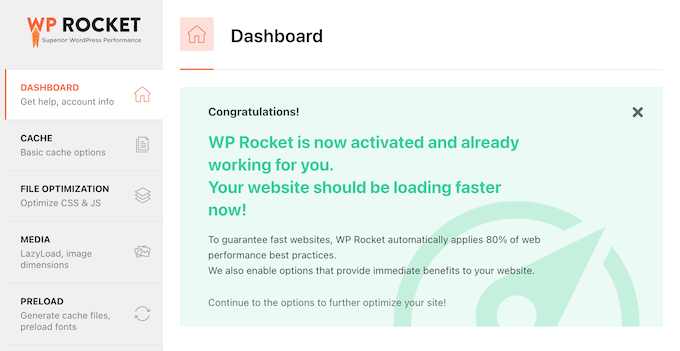
To keep things simple and safe, I recommend using a premium plugin like WP Rocket. It is designed to be WooCommerce-aware, which means it automatically detects your store pages and excludes them from caching right out of the box.
All you have to do is install the plugin and enable the basic settings, and it will handle the complex work of balancing speed with store security for you.
6. Use an SMTP Provider to Ensure Reliable Email Delivery
As your store grows, the number of emails you send, like order receipts, shipping updates, and password resets, grows with it.
By default, WordPress uses the PHP mail function, which is often unreliable and can put a heavy strain on your server. When your server is busy trying to deliver hundreds of emails, it can momentarily pause other tasks, like processing a customer’s payment.
We use WP Mail SMTP across all our brands to solve this exact problem. By connecting your site to a professional mailer service like SendLayer or SMTP.com, you offload the work of sending emails to a dedicated server.
This not only makes sure your emails actually land in your customers’ inboxes, but it also frees up your own server to focus entirely on running your shop.
If you have a massive inventory with hundreds or thousands of products, then your shop pages can become very heavy. If your site tries to load too many products at once, then it can overwhelm your database and cause the browser to hang.
This is where lazy loading and smart pagination become very helpful.
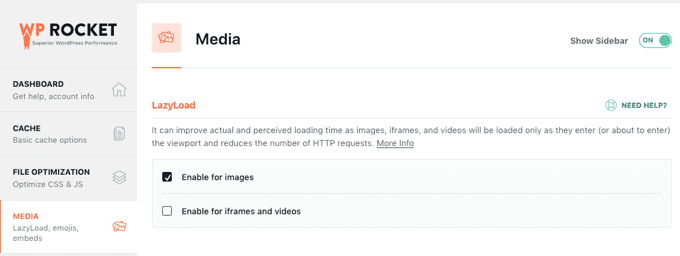
Instead of showing everything at once, you should configure your store to load images only as the customer scrolls down the page.
Most modern themes do this automatically, and the WP Rocket plugin you set up earlier can handle it too, so you don’t need to add a separate plugin just for lazy loading.
Additionally, you should make sure you aren’t displaying too many products on a single page.
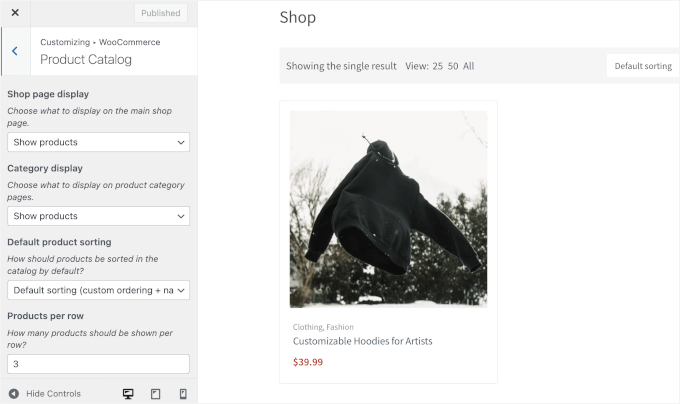
If you are using a classic theme, you can easily break your catalog into smaller pages by going to Appearance » Customize in your dashboard, clicking on WooCommerce » Product Catalog, and lowering the number of rows per page.
If you use a newer block-based theme, you can achieve the same result by adjusting the settings in your Shop page’s ‘Products’ block.
8. Upgrade Your Product Search to Reduce Database Strain
The default WordPress search feature is quite slow and resource-heavy.
If you have hundreds or thousands of products, and multiple customers search for items at the same time, then it forces your database to scan every single product description, which can cause your server to freeze.
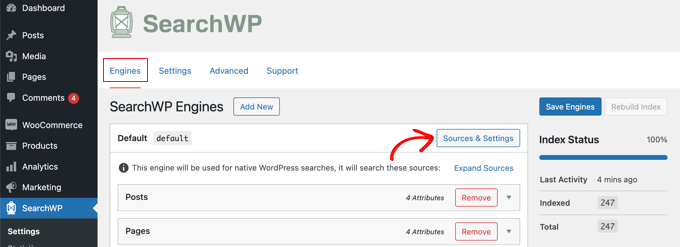
To scale your search, I highly recommend replacing the default search with a plugin like SearchWP. Instead of forcing your server to work hard on every single search, SearchWP builds its own highly optimized index in the background.
This takes a massive amount of processing strain off your database while delivering incredibly fast search results.
Plus, SearchWP is much more flexible than the default setup, allowing your customers to easily find items by searching for product SKUs, categories, tags, and custom attributes.
When your store reaches a certain volume of consistent traffic, basic optimizations may no longer be enough. At this stage, you need to look at the underlying infrastructure that powers your website.
This means putting advanced systems in place that change how your server and database communicate. The goal is to handle high concurrency, which simply means keeping your site fast even when hundreds of actions are happening at the exact same time.
The following tips move into more technical territory, but they are the exact strategies used by the world’s largest eCommerce brands.
9. Make Sure High-Performance Order Storage (HPOS) Is Active
WooCommerce used to store all of your order data in the same database table as your blog posts and pages. As your store grows, that table becomes massive and disorganized, forcing your server to dig through mountains of data just to find a single customer’s receipt.
High-Performance Order Storage (HPOS) is a modern solution that moves your commerce data into its own dedicated, indexed tables.
Using this is like moving from a messy filing cabinet to a highly organized digital database. It makes order processing significantly faster.
If you recently launched your online store, then HPOS is likely turned on by default. However, if you have an older store, then you may still be using the slow, legacy storage method.
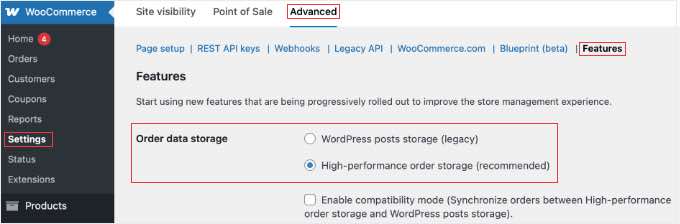
You can verify this by going to WooCommerce » Settings, clicking the ‘Advanced’ tab, and selecting ‘Features’.
Under the ‘Order data storage’ section, make sure ‘High-performance order storage (recommended)’ is selected.
If you do not see these options at all, then first make sure your WooCommerce plugin is fully up to date. If you are on the latest version of WooCommerce and still don’t see the option to switch, it usually means one of your plugins isn’t compatible with HPOS yet, so WooCommerce has temporarily disabled the toggle.
It can also simply mean your store is already using the modern storage method. Either way, the change is reversible, so you can look for any plugins flagged as incompatible on this same settings screen, update or remove them, and the option will reappear.
Note: You will also see an option to ‘Enable compatibility mode’. If you are migrating an existing store from the legacy storage, keep this on while WooCommerce syncs your orders across so you can revert cleanly if something goes wrong, then turn it off once the sync is complete.
You don’t want to leave it on permanently, because syncing orders to both tables forces your server to do double the work. Also, ignore any settings under the ‘Experimental’ section.
If you need to make the switch from the legacy storage, then make sure to create a full website backup first, and check that your other plugins don’t show any incompatibility warnings. It’s a powerful move that prepares your database for thousands of orders reliably.
10. Use Redis to Speed Up Your Database Queries
Every time a customer clicks a product, your server has to ask the database for the price and stock level. If you have a hundred people doing this at once, then your database can get overwhelmed.
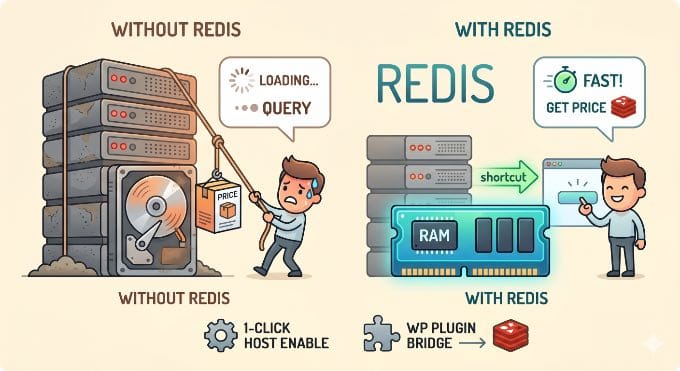
Redis acts like a ‘shortcut’ memory for your server. It stores the answers to those common database questions in the server’s RAM, so it doesn’t have to go digging through the database every time.
Setting up Redis is a two-step process. First, the software must be running on your server. Most high-quality managed hosts, like SiteGround or Levamo (formerly Rapyd Cloud), allow you to turn on Redis with a single click in your hosting dashboard.
Second, you have to connect your website to that server software. Once your host confirms Redis is active, you just need to install a free, lightweight bridge plugin like Redis Object Cache. This tells WordPress to start sending data to your new shortcut memory.
This simple combination will make your entire store feel much faster, especially for logged-in customers who are moving through the checkout process.
11. Protect Your Resources with a Web Application Firewall (WAF)
Not all traffic to your store is good traffic. Scraper bots and price-checking bots can consume a significant share of your server’s resources during a peak sale.
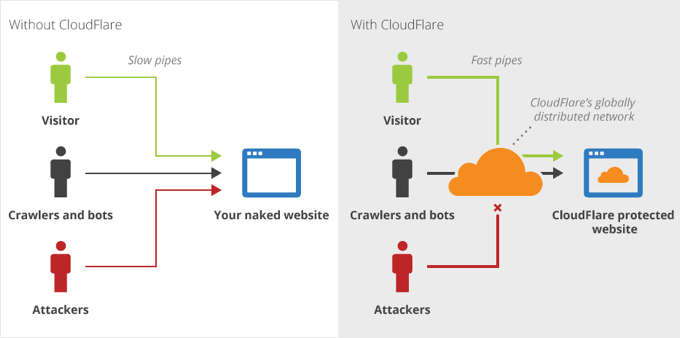
A Web Application Firewall (WAF) acts like a security guard at the front door by filtering out these malicious bots before they ever reach your website. This makes sure that 100% of your server’s power is reserved for real, paying customers.
Security is a major part of scaling, and we take it very seriously. We moved our infrastructure to Cloudflare’s Enterprise plan as our primary firewall.
We actually switched from Sucuri to Cloudflare specifically because it allowed us to handle our massive traffic volume and security needs more efficiently at scale.
Whether you use Cloudflare or a plugin-based firewall like Wordfence or Sucuri, keeping the bots away is essential for staying online during a rush.
12. Use a Content Delivery Network (CDN) to Serve Images Faster
When you have customers shopping from all over the world, the physical distance between them and your server matters.
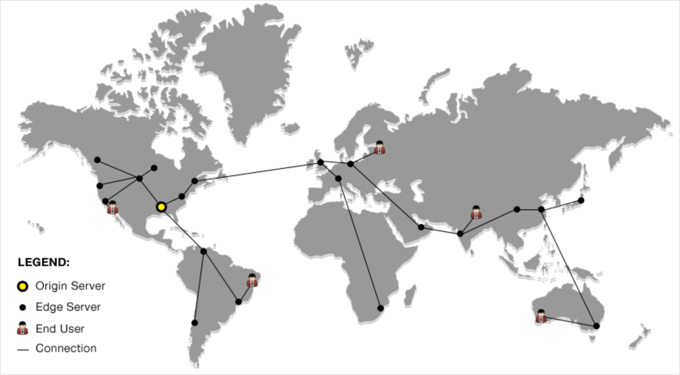
If your server is in New York and your customer is in London, then those heavy product images have to travel a long way, which takes time. A Content Delivery Network (CDN) solves this by keeping copies of your images on a global network of servers.
When someone visits your store, the CDN serves the images from the server closest to them. This takes the heavy lifting off your main web server and makes sure your site loads instantly, no matter where your customers are located.
Setting this up is usually as simple as connecting your site to a service like Cloudflare or Bunny.net.
A high-traffic store handles a lot more sensitive customer data than a small one, and that makes it a bigger target.
On top of the firewall we set up earlier in Tip 11, there are a few other layers worth locking down once you start growing.
First, make sure your whole store runs on SSL and HTTPS, not just the checkout page. This encrypts every page your customers touch.
Next, I recommend turning on two-factor authentication for your admin and store logins, so a stolen password alone can’t get anyone into your dashboard.
Keep up the regular backups with Duplicator from Phase 1, and pair them with a reputable security plugin like Wordfence or Sucuri from Tip 11. Our ultimate WordPress security guide walks through the full checklist.
Finally, handle payments through a reputable, PCI-compliant gateway. Most scaling WooCommerce stores use WooPayments or Stripe, which keep sensitive card data off your own server entirely.
Phase 4: The Growth Tier (Advanced Solutions)
Once your store is handling thousands of daily visitors, your focus shifts from minor speed tweaks to total site stability.
These final steps are your ultimate safety net to make sure your store stays online during massive traffic spikes like a Black Friday sale or viral product launch.
Before using these advanced solutions, I highly recommend stress testing your site. This uses simulated traffic to find your server’s current breaking point.
Once you know exactly what your store can handle, the following upgrades will help you push that limit even higher.
14. Use a Virtual Waiting Room to Prevent Crashes During Sales
If you are planning a massive product launch or a Black Friday sale, then you might face a sudden surge of thousands of people hitting your checkout button at the exact same second.
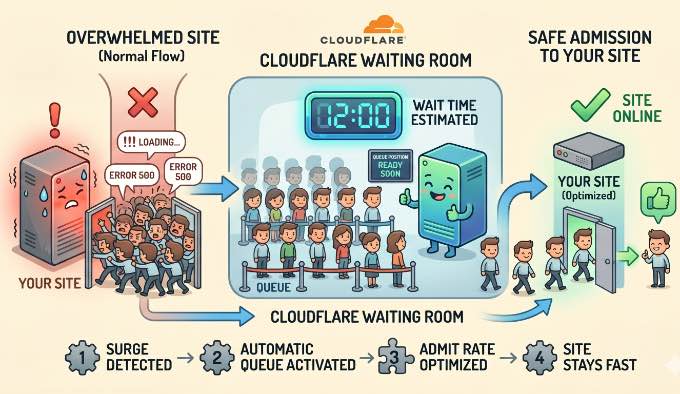
Even the best-optimized servers have a breaking point. A virtual waiting room acts as a safety valve by letting in a specific number of shoppers at a time while others wait in a branded queue.
This prevents your site from crashing and makes sure that the people currently in the store have a fast, glitch-free experience.
Tools like Cloudflare Waiting Room allow you to toggle this on shortly before your sale begins. It is much better to have customers wait in line for two minutes than to have your entire website go offline and lose those sales entirely.
There comes a point where no amount of software tweaking can overcome the limitations of a basic hosting plan. If you’ve used my tips above and your store still feels slow during busy hours, then it’s likely time to move to an enterprise-grade managed host.
Unlike shared hosting, these plans provide ‘burst’ capacity. This is extra processing power that activates automatically when you have a rush of shoppers.
These hosts are built specifically for the high-concurrency needs of WooCommerce, and are designed to keep your site fast even when hundreds of customers are shopping at the exact same time.
Moving your store might feel like a big step, but most of these providers offer free migration tools that handle moving your files and database for you. It’s the ultimate way to make sure your store stays online as you grow to thousands of sales a day.
Frequently Asked Questions About Scaling WooCommerce
Scaling a high-traffic store can feel tricky, but it is actually the best problem a business owner can have. It means you are growing.
Here are the most common questions I hear from readers who are ready to take their store to the next level.
Can WooCommerce handle 100,000 or even 1 million products?
Yes, absolutely. While a basic, unoptimized WordPress installation will struggle with massive catalogs, a properly scaled WooCommerce store can handle hundreds of thousands to over a million products.
To achieve this enterprise-level scale, you must utilize High-Performance Order Storage (HPOS), use an object caching system like Redis, and host your store on an enterprise-grade managed hosting environment that can handle the database load.
Will a CDN make my WooCommerce checkout faster?
A Content Delivery Network (CDN) is great for making your product images and site design load instantly for people all over the world. However, the actual checkout process is dynamic, meaning it has to talk directly to your main web server to handle unique totals and payments.
While a CDN won’t speed up that specific payment math, it helps scale your store by taking the heavy lifting of images off your server, leaving it plenty of power to process orders quickly.
Is it safe to turn on High-Performance Order Storage (HPOS) for an older store?
Yes, HPOS is completely safe and is the standard for all new WooCommerce stores. However, if you are upgrading an older store, then you should take one quick precaution first.
Because it changes how WooCommerce saves order data, some outdated plugins might not be ready for the change. Before you make the switch, look for any ‘incompatible’ warnings listed on that same settings page.
If everything looks clear, then I always recommend testing it on a staging site first, just to be 100% sure your specific store continues to run smoothly.
What is the main difference between making a site fast and scaling it?
Speed is about how fast a single page loads for one person, which you can usually fix with a good theme and image optimization.
Scaling is about making sure your site stays fast when 500 people are all trying to buy something at the same exact time.
Scaling usually requires under-the-hood upgrades like moving to a managed host, using Redis to help your database, and offloading tasks like email.
Can I use Redis on shared hosting?
Usually not. Most basic shared hosting plans don’t include Redis, since it has to run as a separate service on your server.
If your host doesn’t support it, that is often a sign you have outgrown shared hosting. Moving to a managed WooCommerce host usually gives you Redis with a one-click toggle, along with the extra power a growing store needs.
Additional Resources on Growing Your Online Store
I hope this article helped you learn how to scale your WooCommerce store to handle more traffic and sales.
Now that your infrastructure is ready for growth, you might like to see some additional resources on growing your business and reaching more customers:
Growing a WooCommerce store is one thing. Scaling it is a whole different challenge. At some point, the simple setups that got you to your first 100 sales will actually start to slow your website down as you grow.
That’s where most store owners get stuck. Slow load times, abandoned carts, and checkout processes that lose money are common problems with scaling WooCommerce. Luckily, these are fixable problems if you know where to look.
That’s why I put this guide together. I’ve broken scaling down into four phases, from quick wins you can do today to the advanced setups behind the biggest eCommerce brands, so you can start wherever your store is right now.
Whether you’re just hitting your growth ceiling or ready to go big, these tips will help you get there faster.
Quick Summary: Scaling a WooCommerce store means lightening the background work your server does and giving it room to serve many shoppers at once, which you build up across four phases.
Phase 1 – Quick maintenance wins: clean the database, remove unused plugins, and compress images to free up resources.
Most people think a fast online store is all they need. But there is a big difference between a site that loads quickly for one person and a site that stays fast when hundreds of people are shopping at the same time.
When a customer adds an item to their cart or heads to the checkout, your server has to do a lot of work behind the scenes. It has to check inventory, calculate taxes, and communicate with your payment processor.
If too many people try to do this at once, then your server can become overwhelmed. Think of it like a computer trying to open 50 heavy programs at the same time. Eventually, it just freezes.
Scaling is the process of making those background tasks lighter and giving your server the processing power it needs to handle a crowd without crashing.
Signs Your WooCommerce Store Is Ready to Scale
Not sure if your store has hit this point yet?
Here are the most common signs that it’s time to scale your WooCommerce store:
Your pages load slowly or your server takes longer to respond when traffic is high.
Your site slows down or crashes during traffic spikes, product launches, or big sales.
A growing catalog of hundreds or thousands of products is making your shop and search pages heavy.
Your current hosting plan is maxing out, hitting CPU or RAM limits, or throwing frequent errors.
We use MonsterInsights to keep an eye on these numbers, because it brings your Google Analytics data right into the WordPress dashboard.
Its eCommerce report shows your conversion rate, revenue, average order value, and top products, while its traffic reports show when visitors surge. That makes it much easier to spot a declining conversion rate or a sudden traffic spike early, so you can start scaling before it costs you sales.
Before you change a single setting, it helps to know where your store stands today. Scaling works best as a loop: measure, make a change, then measure again.
Without a baseline, you can’t tell whether a tweak actually helped or where your next bottleneck is hiding. (You’ll stress test your store later in Phase 4 to find its breaking point, but that comes after you know your starting numbers.)
Watch your Core Web Vitals most of all. These are the three metrics Google uses to judge page experience: Largest Contentful Paint (LCP), Interaction to Next Paint (INP), and Cumulative Layout Shift (CLS).
Then, make a note of your baseline scores so that you have something to compare to once you’ve followed the tips in this guide.
Scaling doesn’t always need a massive budget or a team of developers. In fact, many of the best performance gains come from just cleaning up the clutter that collects as a store grows.
These first few steps are designed to be low-risk and high-reward, allowing you to see immediate improvements in your site’s responsiveness.
Think of this phase as clearing the tracks so your store can run at full speed without any hidden obstacles slowing it down.
1. Regularly Clean Up Your Database to Prevent Sluggishness
Every time a customer visits your store, your server has to talk to your database. A busy store generates a massive amount of junk data, such as expired transients, old order logs, and orphaned metadata.
If your database is cluttered, then these queries take longer, leading to a slow experience for your customers. To keep things moving quickly, you should get into the habit of performing a deep clean once a month.
Important: Always create a complete backup of your website using a plugin like Duplicator before optimizing your database.
After your backup, you can use a plugin like DB Optimizer to clean your database.
It allows you to do bulk database cleanups, optimize and repair your database tables, and view everything from a beginner-friendly health score dashboard.
It is tempting to install a new plugin for every small feature you want to add. However, every active plugin adds code that your server must process. In many cases, heavy plugins can be the primary reason that a store fails to scale.
At WPBeginner, we use WPCode to replace several single-purpose plugins. This is a strategy we use across our brands because it allows us to keep our site functionality high without adding unnecessary bloat to our server.
For WooCommerce stores specifically, the Merchant plugin is an all-in-one WooCommerce growth tool with 40+ tools included. It allows you to handle BOGO offers, product bundles, product waitlists, and more.
I also recommend periodically reviewing your active plugins and asking if each one is truly essential. If a plugin isn’t providing clear value, then it’s best to deactivate and delete it entirely.
If you aren’t sure which plugins are the problem, then you can add a WordPress query monitor to see exactly which ones are making your server work too hard.
Note: Query Monitor is an advanced developer tool, so its dashboard can look intimidating at first, but it is highly effective for identifying slow plugins.
High-resolution product photos are essential for making sales, but they are also a common cause of slow page loads. If your server is busy struggling to send huge image files to dozens of visitors at once, then it won’t have the resources left to process checkouts quickly.
The good news is that you can fix this without losing image quality. You can use a plugin like WP Smush to automatically shrink your images as you upload them.
I also recommend enabling WebP conversion within these plugins. This serves your photos in a modern format that looks great but is significantly lighter for your server to handle. It’s a simple ‘set it and forget it’ win for your store’s speed.
By default, WooCommerce uses a feature called ‘Cart Fragments’. This script ‘pings’ your server on every single page load, even on basic blog posts, just to update the cart icon in your header.
While this seems small, on a high-traffic site, it can result in thousands of unnecessary server requests every hour that slow down your real customers.
The most efficient way to handle this is to disable the script on the pages where it isn’t needed, like your homepage or your blog. You can do this easily by adding a custom PHP snippet using WPCode.
Simply create a new snippet, set the code type to ‘PHP Snippet’, and paste in a bit of code that tells the script to only run on your shop and checkout pages. This keeps your store functional while freeing up significant server resources.
add_action( 'wp_enqueue_scripts', 'wpb_disable_cart_fragments', 99 );

function wpb_disable_cart_fragments() {
    // Check if WooCommerce is active and we are NOT on a store-related page
    if ( function_exists( 'is_woocommerce' ) ) {
        if ( ! is_woocommerce() && ! is_cart() && ! is_checkout() && ! is_account_page() ) {
            wp_dequeue_script( 'wc-cart-fragments' );
        }
    }
}
Note: If you are using a modern block-based theme, then WooCommerce likely already optimizes this for you. However, for classic themes (like Astra or OceanWP), this snippet provides a massive speed boost.
Once you have a clean foundation, the next step is to optimize how your store handles its core functions.
WooCommerce is a dynamic platform, which means it has to do a lot of ‘thinking’ every time a customer interacts with a product or a cart. If these processes aren’t streamlined, then they can quickly become bottlenecks as your traffic increases.
These professional-grade site tweaks help your server work smarter. By offloading heavy tasks like email delivery and media loading, you make sure your store remains stable even as your product catalog and customer base expand.
5. Use a WooCommerce-Optimized Caching Plugin
Caching is one of the most effective ways to speed up any WordPress site because it saves a snapshot of your pages so your server doesn’t have to rebuild them from scratch for every visitor.
However, for a WooCommerce store, you have to be careful. You never want to cache dynamic pages like the Cart, Checkout, or My Account, because this could accidentally show one customer’s personal information to another.
To keep things simple and safe, I recommend using a premium plugin like WP Rocket. It is designed to be WooCommerce-aware, which means it automatically detects your store pages and excludes them from caching right out of the box.
All you have to do is install the plugin and enable the basic settings, and it will handle the complex work of balancing speed with store security for you.
6. Use an SMTP Provider to Ensure Reliable Email Delivery
As your store grows, the number of emails you send, like order receipts, shipping updates, and password resets, grows with it.
By default, WordPress uses the PHP mail function, which is often unreliable and can put a heavy strain on your server. When your server is busy trying to deliver hundreds of emails, it can momentarily pause other tasks, like processing a customer’s payment.
We use WP Mail SMTP across all our brands to solve this exact problem. By connecting your site to a professional mailer service like SendLayer or SMTP.com, you offload the work of sending emails to a dedicated server.
This not only makes sure your emails actually land in your customers’ inboxes, but it also frees up your own server to focus entirely on running your shop.
If you have a massive inventory with hundreds or thousands of products, then your shop pages can become very heavy. If your site tries to load too many products at once, then it can overwhelm your database and cause the browser to hang.
This is where lazy loading and smart pagination become very helpful.
Instead of showing everything at once, you should configure your store to load images only as the customer scrolls down the page.
Most modern themes do this automatically, and the WP Rocket plugin you set up earlier can handle it too, so you don’t need to add a separate plugin just for lazy loading.
Additionally, you should make sure you aren’t displaying too many products on a single page.
If you are using a classic theme, you can easily break your catalog into smaller pages by going to Appearance » Customize in your dashboard, clicking on WooCommerce » Product Catalog, and lowering the number of rows per page.
If you use a newer block-based theme, you can achieve the same result by adjusting the settings in your Shop page’s ‘Products’ block.
8. Upgrade Your Product Search to Reduce Database Strain
The default WordPress search feature is quite slow and resource-heavy.
If you have hundreds or thousands of products, and multiple customers search for items at the same time, then it forces your database to scan every single product description, which can cause your server to freeze.
To scale your search, I highly recommend replacing the default search with a plugin like SearchWP. Instead of forcing your server to work hard on every single search, SearchWP builds its own highly optimized index in the background.
This takes a massive amount of processing strain off your database while delivering incredibly fast search results.
Plus, SearchWP is much more flexible than the default setup, allowing your customers to easily find items by searching for product SKUs, categories, tags, and custom attributes.
When your store reaches a certain volume of consistent traffic, basic optimizations may no longer be enough. At this stage, you need to look at the underlying infrastructure that powers your website.
This means putting advanced systems in place that change how your server and database communicate. The goal is to handle high concurrency, which simply means keeping your site fast even when hundreds of actions are happening at the exact same time.
The following tips move into more technical territory, but they are the exact strategies used by the world’s largest eCommerce brands.
9. Make Sure High-Performance Order Storage (HPOS) Is Active
WooCommerce used to store all of your order data in the same database table as your blog posts and pages. As your store grows, that table becomes massive and disorganized, forcing your server to dig through mountains of data just to find a single customer’s receipt.
High-Performance Order Storage (HPOS) is a modern solution that moves your commerce data into its own dedicated, indexed tables.
Using this is like moving from a messy filing cabinet to a highly organized digital database. It makes order processing significantly faster.
If you recently launched your online store, then HPOS is likely turned on by default. However, if you have an older store, then you may still be using the slow, legacy storage method.
You can verify this by going to WooCommerce » Settings, clicking the ‘Advanced’ tab, and selecting ‘Features’.
Under the ‘Order data storage’ section, make sure ‘High-performance order storage (recommended)’ is selected.
If you do not see these options at all, then first make sure your WooCommerce plugin is fully up to date. If you are on the latest version of WooCommerce and still don’t see the option to switch, it usually means one of your plugins isn’t compatible with HPOS yet, so WooCommerce has temporarily disabled the toggle.
It can also simply mean your store is already using the modern storage method. Either way, the change is reversible, so you can look for any plugins flagged as incompatible on this same settings screen, update or remove them, and the option will reappear.
Note: You will also see an option to ‘Enable compatibility mode’. If you are migrating an existing store from the legacy storage, keep this on while WooCommerce syncs your orders across so you can revert cleanly if something goes wrong, then turn it off once the sync is complete.
You don’t want to leave it on permanently, because syncing orders to both tables forces your server to do double the work. Also, ignore any settings under the ‘Experimental’ section.
If you need to make the switch from the legacy storage, then make sure to create a full website backup first, and check that your other plugins don’t show any incompatibility warnings. It’s a powerful move that prepares your database for thousands of orders reliably.
10. Use Redis to Speed Up Your Database Queries
Every time a customer clicks a product, your server has to ask the database for the price and stock level. If you have a hundred people doing this at once, then your database can get overwhelmed.
Redis acts like a ‘shortcut’ memory for your server. It stores the answers to those common database questions in the server’s RAM, so it doesn’t have to go digging through the database every time.
Setting up Redis is a two-step process. First, the software must be running on your server. Most high-quality managed hosts, like SiteGround or Levamo (formerly Rapyd Cloud), allow you to turn on Redis with a single click in your hosting dashboard.
Second, you have to connect your website to that server software. Once your host confirms Redis is active, you just need to install a free, lightweight bridge plugin like Redis Object Cache. This tells WordPress to start sending data to your new shortcut memory.
This simple combination will make your entire store feel much faster, especially for logged-in customers who are moving through the checkout process.
11. Protect Your Resources with a Web Application Firewall (WAF)
Not all traffic to your store is good traffic. Scraper bots and price-checking bots can consume a significant share of your server’s resources during a peak sale.
A Web Application Firewall (WAF) acts like a security guard at the front door by filtering out these malicious bots before they ever reach your website. This makes sure that 100% of your server’s power is reserved for real, paying customers.
Security is a major part of scaling, and we take it very seriously. We moved our infrastructure to Cloudflare’s Enterprise plan as our primary firewall.
We actually switched from Sucuri to Cloudflare specifically because it allowed us to handle our massive traffic volume and security needs more efficiently at scale.
Whether you use Cloudflare or a plugin-based firewall like Wordfence or Sucuri, keeping the bots away is essential for staying online during a rush.
12. Use a Content Delivery Network (CDN) to Serve Images Faster
When you have customers shopping from all over the world, the physical distance between them and your server matters.
If your server is in New York and your customer is in London, then those heavy product images have to travel a long way, which takes time. A Content Delivery Network (CDN) solves this by keeping copies of your images on a global network of servers.
When someone visits your store, the CDN serves the images from the server closest to them. This takes the heavy lifting off your main web server and makes sure your site loads instantly, no matter where your customers are located.
Setting this up is usually as simple as connecting your site to a service like Cloudflare or Bunny.net.
A high-traffic store handles a lot more sensitive customer data than a small one, and that makes it a bigger target.
On top of the firewall we set up earlier in Tip 11, there are a few other layers worth locking down once you start growing.
First, make sure your whole store runs on SSL and HTTPS, not just the checkout page. This encrypts every page your customers touch.
Next, I recommend turning on two-factor authentication for your admin and store logins, so a stolen password alone can’t get anyone into your dashboard.
Keep up the regular backups with Duplicator from Phase 1, and pair them with a reputable security plugin like Wordfence or Sucuri from Tip 11. Our ultimate WordPress security guide walks through the full checklist.
Finally, handle payments through a reputable, PCI-compliant gateway. Most scaling WooCommerce stores use WooPayments or Stripe, which keep sensitive card data off your own server entirely.
Phase 4: The Growth Tier (Advanced Solutions)
Once your store is handling thousands of daily visitors, your focus shifts from minor speed tweaks to total site stability.
These final steps are your ultimate safety net to make sure your store stays online during massive traffic spikes like a Black Friday sale or viral product launch.
Before using these advanced solutions, I highly recommend stress testing your site. This uses simulated traffic to find your server’s current breaking point.
Once you know exactly what your store can handle, the following upgrades will help you push that limit even higher.
14. Use a Virtual Waiting Room to Prevent Crashes During Sales
If you are planning a massive product launch or a Black Friday sale, then you might face a sudden surge of thousands of people hitting your checkout button at the exact same second.
Even the best-optimized servers have a breaking point. A virtual waiting room acts as a safety valve by letting in a specific number of shoppers at a time while others wait in a branded queue.
This prevents your site from crashing and makes sure that the people currently in the store have a fast, glitch-free experience.
Tools like Cloudflare Waiting Room allow you to toggle this on shortly before your sale begins. It is much better to have customers wait in line for two minutes than to have your entire website go offline and lose those sales entirely.
There comes a point where no amount of software tweaking can overcome the limitations of a basic hosting plan. If you’ve used my tips above and your store still feels slow during busy hours, then it’s likely time to move to an enterprise-grade managed host.
Unlike shared hosting, these plans provide ‘burst’ capacity. This is extra processing power that activates automatically when you have a rush of shoppers.
These hosts are built specifically for the high-concurrency needs of WooCommerce, and are designed to keep your site fast even when hundreds of customers are shopping at the exact same time.
Moving your store might feel like a big step, but most of these providers offer free migration tools that handle moving your files and database for you. It’s the ultimate way to make sure your store stays online as you grow to thousands of sales a day.
Frequently Asked Questions About Scaling WooCommerce
Scaling a high-traffic store can feel tricky, but it is actually the best problem a business owner can have. It means you are growing.
Here are the most common questions I hear from readers who are ready to take their store to the next level.
Can WooCommerce handle 100,000 or even 1 million products?
Yes, absolutely. While a basic, unoptimized WordPress installation will struggle with massive catalogs, a properly scaled WooCommerce store can handle hundreds of thousands to over a million products.
To achieve this enterprise-level scale, you must utilize High-Performance Order Storage (HPOS), use an object caching system like Redis, and host your store on an enterprise-grade managed hosting environment that can handle the database load.
Will a CDN make my WooCommerce checkout faster?
A Content Delivery Network (CDN) is great for making your product images and site design load instantly for people all over the world. However, the actual checkout process is dynamic, meaning it has to talk directly to your main web server to handle unique totals and payments.
While a CDN won’t speed up that specific payment math, it helps scale your store by taking the heavy lifting of images off your server, leaving it plenty of power to process orders quickly.
Is it safe to turn on High-Performance Order Storage (HPOS) for an older store?
Yes, HPOS is completely safe and is the standard for all new WooCommerce stores. However, if you are upgrading an older store, then you should take one quick precaution first.
Because it changes how WooCommerce saves order data, some outdated plugins might not be ready for the change. Before you make the switch, look for any ‘incompatible’ warnings listed on that same settings page.
If everything looks clear, then I always recommend testing it on a staging site first, just to be 100% sure your specific store continues to run smoothly.
What is the main difference between making a site fast and scaling it?
Speed is about how fast a single page loads for one person, which you can usually fix with a good theme and image optimization.
Scaling is about making sure your site stays fast when 500 people are all trying to buy something at the same exact time.
Scaling usually requires under-the-hood upgrades like moving to a managed host, using Redis to help your database, and offloading tasks like email.
Can I use Redis on shared hosting?
Usually not. Most basic shared hosting plans don’t include Redis, since it has to run as a separate service on your server.
If your host doesn’t support it, that is often a sign you have outgrown shared hosting. Moving to a managed WooCommerce host usually gives you Redis with a one-click toggle, along with the extra power a growing store needs.
Additional Resources on Growing Your Online Store
I hope this article helped you learn how to scale your WooCommerce store to handle more traffic and sales.
Now that your infrastructure is ready for growth, you might like to see some additional resources on growing your business and reaching more customers:
Bob Dunn has launched a blog commentary and a weekly series, “Open Tabs.” Do the Woo is now an independent podcast. Updates include a redesigned homepage, new episode features, and a newsletter format change.
Hyderabad Chronicle brings the city into focus with lively reporting, sharp local insight, and stories that matter to readers across neighborhoods, industries, and communities. From breaking developments and civic updates to culture, business, sports, and entertainment, our newsroom is built to help you stay informed without feeling overwhelmed.
We created Hyderabad Chronicle for readers who want more than headlines. Our daily digital coverage keeps pace with the rhythm of the city, while our weekly magazine offers deeper features, fresh perspectives, and thoughtful storytelling that adds context to the news cycle.
What readers can expect
Daily local news with a strong Hyderabad focus
Coverage across politics, business, entertainment, sports, and community stories
A weekly magazine with feature-driven editorial content
An e-paper experience for readers who enjoy a familiar news format
Built for modern readers
News habits have changed, and Hyderabad Chronicle is designed for that reality. Whether you are checking updates between meetings, catching up on the day over coffee, or browsing weekend reads at your own pace, our platform makes it easy to move from fast updates to in-depth reporting.
Good local journalism helps a city understand itself, and that is the spirit behind every edition of Hyderabad Chronicle.
Why it matters
In a fast-moving city, reliable reporting creates connection. Hyderabad Chronicle aims to be a trusted place for readers to discover what is changing, what is worth celebrating, and what deserves closer attention. We are here to inform, engage, and reflect the energy of Hyderabad every single day.
This post recaps how the WordPress project’s five Global Partners — Jetpack, WordPress.com, WooCommerce, Bluehost, and Hostinger — supported community events during the first half of 2026. Across more than a dozen regional the first WordPress Developers Day, and a growing network of WordPress Campus Connect events, Global Partners staffed booths, sponsored sessions, and connected with developers, freelancers, students, and agency owners around the world.
A global footprint
The year began in January with WordCamp Nepal, where Jetpack joined the community in Kathmandu. The momentum carried into India, where WordCamp Kolhapur and, a week later, WordCamp Pune brought Global Partners face-to-face with a student-heavy audience of roughly 200-250 attendees. In Pune, a session on connecting WordPress with AI workflows drew a large crowd, and attendees were curious about WordPress.com plans, new AI features, and Automattic for Agencies.
In February, Jetpack traveled to WordCamp Port Harcourt in Nigeria, an inclusive and well-organized event with 256 attendees that featured talks on inclusion and accessibility. Locally produced swag was a standout success there, a reminder that the WordPress community’s reach extends well beyond Europe and North America.
Across Europe
Spring brought a wave of European events. At WordCamp Madrid, with 280 attendees, WordPress.com served as a Global Sponsor and ran a Wapuu treasure hunt that drew 97 participants.
Down the coast in France, WordCamp Nice gave Jetpack a chance to connect with 247 freelancers and developers, an audience that appreciated concrete, easy-to-explain solutions and asked questions about newsletters, security, and Jetpack’s broader feature set.
WordCamp Vienna stood out for its developer-heavy crowd of 277. From a Jetpack-branded booth staffed on both days, the team engaged with agencies and merchants, fielded numerous questions about WooCommerce and security, and booked 8 agency meetings. Many builders were interested to learn that Automattic stands behind both WordPress.com and WooCommerce. In Italy and Germany, WordCamp Torino and WordCamp Leipzig both reflected growing curiosity about AI, a theme that resurfaced throughout the year. At Leipzig, with 109 agencies, hosting companies, and freelancers in attendance, WordPress.com staffed a booth where tote bags were in high demand, while conversations kept returning to AI and WordPress Studio.
WordCamp Slovenia and WordCamp Portugal closed the European stretch. WordPress.com brought a booth to Ljubljana, and in Porto, it appeared with both a booth and logo presence alongside WooCommerce, which suited an event filled with e-commerce builders and Woo payment providers. The first WordPress Developers Day in Novi Sad introduced a new format, with Jetpack as a global sponsor and nearly 30 in-depth conversations on Jetpack, WooCommerce, performance, and the realities of client work.
Community in Uganda
In May, WordCamp Kampala brought four Global Partners onto the sponsor roster: Jetpack, WooCommerce, Bluehost, and WordPress.com. The event, themed “Tech for Social Good,” welcomed more than 200 attendees and reflected the energy of a fast-growing local community.
Support from Global Sponsors
Behind every one of these events is a layer of support that does not always appear at a booth. In 2026, Bluehost and Hostinger both joined the WordPress community sponsorship program as top-tier Global Sponsors, alongside Jetpack and WordPress.com. Their contributions help underwrite the global WordCamp program and the community events that make a year like this possible. That program-level backing is what allows organizers in Kathmandu, Porto, and Kampala to bring their events to life, and the WordPress community is grateful to every partner that invests at that scale.
Campus Connect reaches 6,200 students
One of the most notable stories of 2026 is not a WordCamp at all. It is WordPress Campus Connect. As of early June, the program has passed 6,200 students, with 25 events completed in 2026, 45 events all-time, and 42 more in planning or already scheduled. WordPress.com has played a direct support role throughout, including providing hosting for WordPress Campus Connect events around the world.
The connective tissue between these events and the broader community is real. An organizer first met at WordCamp Mukono went on to help lead WordPress Campus Connect work in Uganda. A student who built her first WordPress site at a WordPress Campus Connect event later attended a WordCamp. These events serve as a pathway for the next generation of WordPress contributors, builders, and professionals.
Looking ahead
If 2026 has shown anything, it is that interest in WordPress, and in the tools and services that Global Partners provide, continues to grow around the world. The questions being asked at booths and in sessions are sharper, the audiences more diverse, and the community’s reach more genuinely global. Thank you to Jetpack, WordPress.com, WooCommerce, Bluehost, and Hostinger for being part of that story this year, and to every organizer, volunteer, speaker, and attendee who made these events possible.